Accessibility at Thompson Aero Seating
At Thompson Aero Seating, we believe accessibility should be built into the passenger experience, not added on later.
OVERVIEW
Our approach to accessibility
For us, accessibility is not limited to a specific group of passengers. It reflects how people actually travel today. This includes an ageing population, families travelling with young children, and the reality that most passengers will face some form of challenge at different points in their journey. Our aim is to make travel easier, more intuitive, more inclusive and more comfortable for everyone.
Accessibility is considered from the very start of our design process. Our approach brings together engineering, human-centred design and collaboration with industry partners to ensure accessibility is considered from the very beginning.
Accessibility is considered from the very start of our design process. Our approach brings together engineering, human-centred design and collaboration with industry partners to ensure accessibility is considered from the very beginning.
Designed for access
Accessibility starts with how passengers move through the cabin.
Our seating platforms are designed to make movement as easy as possible, with features such as:
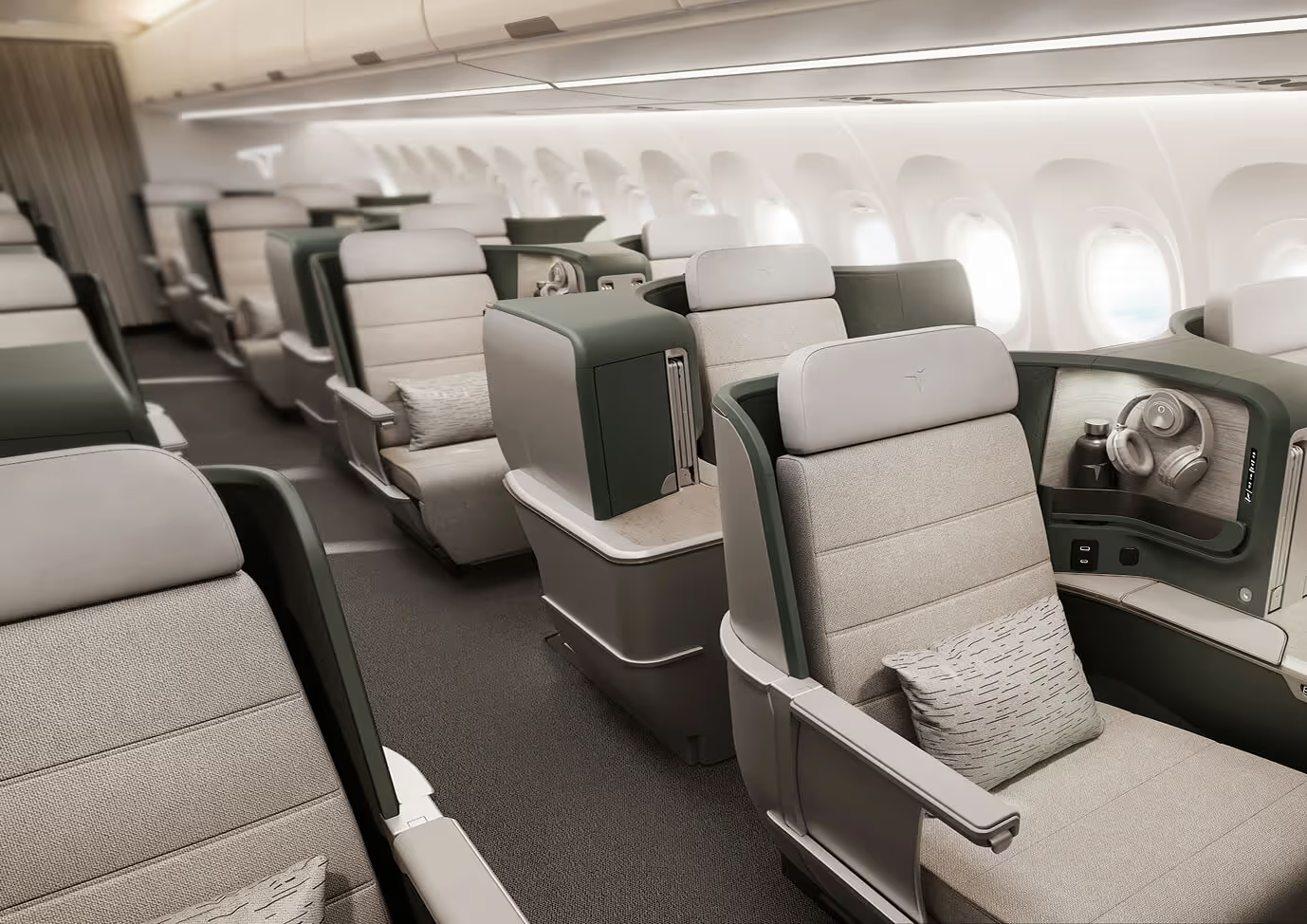
Direct aisle access across our business class configurations
Open and optimised seat geometry to support easier entry and exit
Front row layouts that allow for additional space, including for service animals
These choices benefit not only passengers with reduced mobility, but also older travellers, families and anyone who values a smoother, less stressful journey.
Designed for use
Accessibility is also about how passengers interact with their environment.
Accessibility is also about how passengers interact with their environment.
We focus on making our products intuitive and easy to use, including:
We focus on making our products intuitive and easy to use, including:
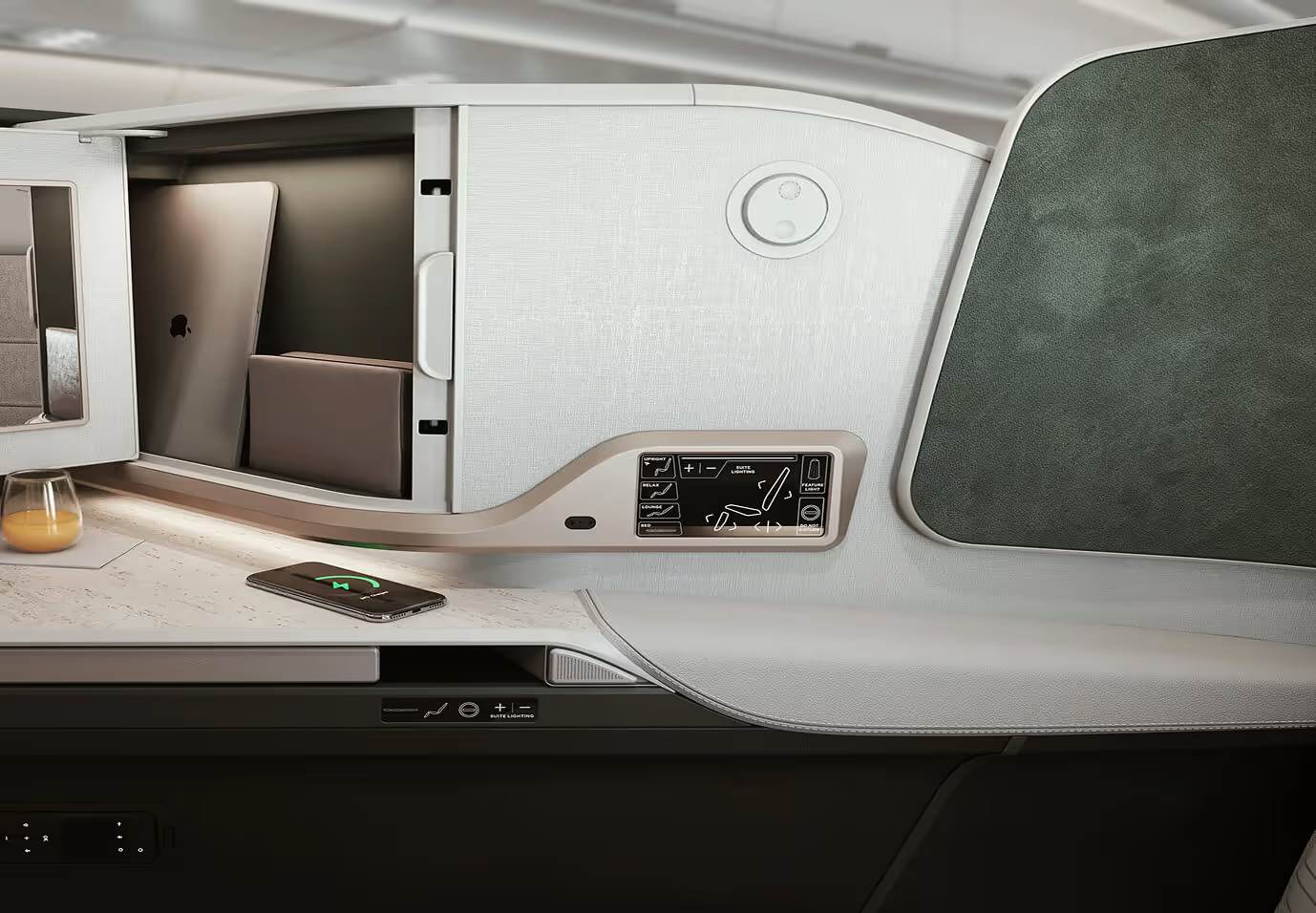
Tactile Passenger Control Units (PCUs), allowing passengers to adjust their seat by touch
Controls positioned for ease of reach
Clear, simple layouts that reduce complexity
These features support a wide range of users, including those with visual impairments, reduced dexterity, or passengers who are simply multitasking while travelling.
Suite door safety and DoT requirement
A key part of suite design is ensuring full compliance with global safety regulations and accessibility requirements.
While emergency egress is a key consideration, accessibility standards such as DoT (14 CFR Part 382) go further. These require that at least 50% of aisle-facing seats are usable by passengers with reduced mobility.
Our designs address this by ensuring that doors and drop-arm mechanisms are specifically engineered to support wheelchair users. Seat geometry, clearances and actuation forces are carefully considered to enable transfers from wheelchairs in a way that is as easy, safe and dignified as possible.
On VantageNOVA, this approach goes even further, with 100% of aisle-facing seats designed to meet these accessibility needs.
Our designs address this by ensuring that doors and drop-arm mechanisms are specifically engineered to support wheelchair users. Seat geometry, clearances and actuation forces are carefully considered to enable transfers from wheelchairs in a way that is as easy, safe and dignified as possible.
On VantageNOVA, this approach goes even further, with 100% of aisle-facing seats designed to meet these accessibility needs.
.avif)
Seat
Detail
A precisely engineered personal environment that brings workspace, dining surface and intelligent storage into a single, sculpted form. The integrated side console is designed to maximise usability within a compact footprint, balancing generous surface area with efficient cabin planning.
Seamlessly integrated dining and work surface
A stable, generously proportioned surface designed for both productivity and premium in-flight dining.
Concealed storage and power access
Integrated compartments and concealed connectivity points keep essentials accessible while maintaining a clean, refined aesthetic.
Aviation-grade materials and finishes
Lightweight, durable components engineered for longevity, maintainability and consistent in-service performance.
Footrest
Detail
A precisely engineered personal environment that brings workspace, dining surface and intelligent storage into a single, sculpted form. The integrated side console is designed to maximise usability within a compact footprint, balancing generous surface area with efficient cabin planning.
Seamlessly integrated dining and work surface
A stable, generously proportioned surface designed for both productivity and premium in-flight dining.
Concealed storage and power access
Integrated compartments and concealed connectivity points keep essentials accessible while maintaining a clean, refined aesthetic.
Aviation-grade materials and finishes
Lightweight, durable components engineered for longevity, maintainability and consistent in-service performance.
In addition, our suite doors are designed in line with FAA and EASA requirements, incorporating:
Emergency release mechanisms
for rapid exit from within the suite
Crew override functionality
for access from outside
Door positioning and locking systems
compliant during taxi, take-off and landing
Clear, intuitive design cues
to support safe operation
Accessibility in practice
VantageNOVA for Delta Air Lines
Our work with Delta Air Lines on VantageNOVA shows how these principles come to life.
The Passenger Control Unit was designed with a tactile interface, inspired by premium automotive design. The controls reflect the shape of the seat, allowing passengers to understand what they are adjusting without needing to look down.
The front row monuments were also reconfigured to provide more space for service animals, supporting passengers who rely on them throughout their journey.
This is a good example of how we work with customers to deliver practical, real-world accessibility solutions.
The front row monuments were also reconfigured to provide more space for service animals, supporting passengers who rely on them throughout their journey.
This is a good example of how we work with customers to deliver practical, real-world accessibility solutions.
Collaboration and innovation
We see accessibility as an industry-wide responsibility.
At events such as Aircraft Interiors Expo, there has been increasing focus on inclusive design and regulatory requirements. Alongside this, we continue to work closely with airline customers to ensure our products support a wide range of passenger needs across different markets and use cases.
We also work with specialist industry partners to explore additional accessibility solutions.
This includes collaboration with organisations such as Airchair, who develop aisle wheelchairs designed for aircraft cabins and Allwheelsup, who advocate for dignified accessible air travel.
We also work with specialist industry partners to explore additional accessibility solutions.
This includes collaboration with organisations such as Airchair, who develop aisle wheelchairs designed for aircraft cabins and Allwheelsup, who advocate for dignified accessible air travel.
Looking ahead
We continue to explore opportunities to improve accessibility
Our focus remains on creating products that are usable and accessible for as many passengers as possible, including:
Voice and AI-enabled control interfaces
More responsive cabin environments
Solutions developed in closer partnership with airlines and industry experts
Inclusive by design
Accessibility is not one feature. It is a way of thinking.
By embedding inclusive thinking from the start, we are helping create a more accessible and intuitive experience for everyone who travels.
An inspired flying experience, powered by people.